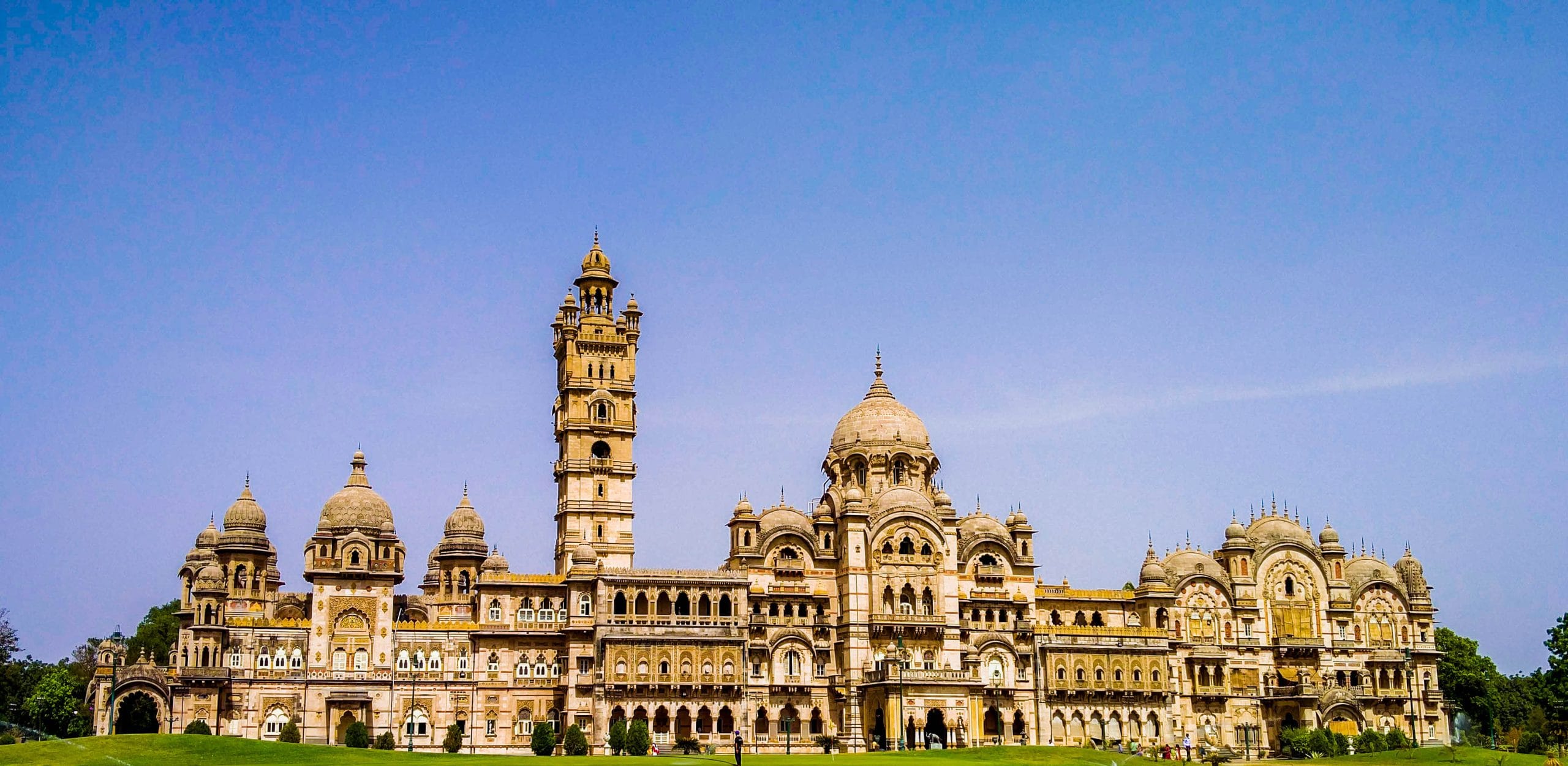
The Laxmi Vilas Palace in Vadodara stands as one of the most majestic structures in India, an architectural marvel that dwarfs many European royal residences. Built in 1890, it remains the private residence of the royal family of Baroda, the Gaekwads.
The Story & History: A Vision of Modernity
Maharaja Sayajirao Gaekwad III, a visionary ruler known for his reforms and patronage of the arts, commissioned the palace. He wanted a residence that reflected the progress and culture of his state.
The Tragic Architect: The design was originally entrusted to Major Charles Mant. History suggests that Mant was so meticulous and overwhelmed by the scale of the project that he became convinced his calculations were wrong and the palace would collapse. Tragically, he took his own life before its completion. The work was later finished by Robert Fellows Chisholm, and the palace has stood firm for over 130 years.

Architectural Brilliance
The palace is a quintessential example of Indo-Saracenic Revival architecture. It is a seamless blend of Hindu, Islamic, and Gothic elements.
- Scale: The estate spreads over 500 acres and is famously four times the size of Buckingham Palace.
- Modern Amenities: At the time of construction, it was incredibly advanced, featuring elevators, a telephone exchange, and a complex electrical system.
- Materials: Built with trap stone from Rajpipla, sandstone from Songadh, and marble from Rajasthan and Italy.

Key Highlights Inside the Palace
1. The Durbar Hall
The crowning jewel of the palace is the Durbar Hall. It features a Venetian mosaic floor, Belgian stained-glass windows, and walls adorned with intricate plasterwork. It served as the venue for royal court sessions and cultural performances.
2. The Art Collection
The palace houses a massive collection of original paintings by the legendary artist Raja Ravi Varma. The Maharaja was a significant patron of Varma, and these paintings remain some of the most valuable cultural assets of the estate.
3. The Grounds & Museum
The sprawling grounds include a 10-hole golf course and a miniature railway that once transported royal children. The Maharaja Fateh Singh Museum, located within the compound, displays a rare collection of sculptures and armory.

Visiting Laxmi Vilas Palace
If you are planning a trip to Gujarat, the palace is a must-visit. It offers an audio tour that narrates the history of the Gaekwads and the construction of this magnificent home. It is not just a monument; it is a living piece of Indian history that continues to inspire awe.